
November 17, 2026
Does Your Aircon Really Need a Gas Top-Up? Leak Checks, Costs and What to Ask in Singapore
Weak cooling doesn’t always mean low gas. Learn how to tell a refrigerant leak from a dirty filter or coil, what a technician should check first, what affects aircon gas top-up costs in Singapore, and the questions to ask before approving any work.
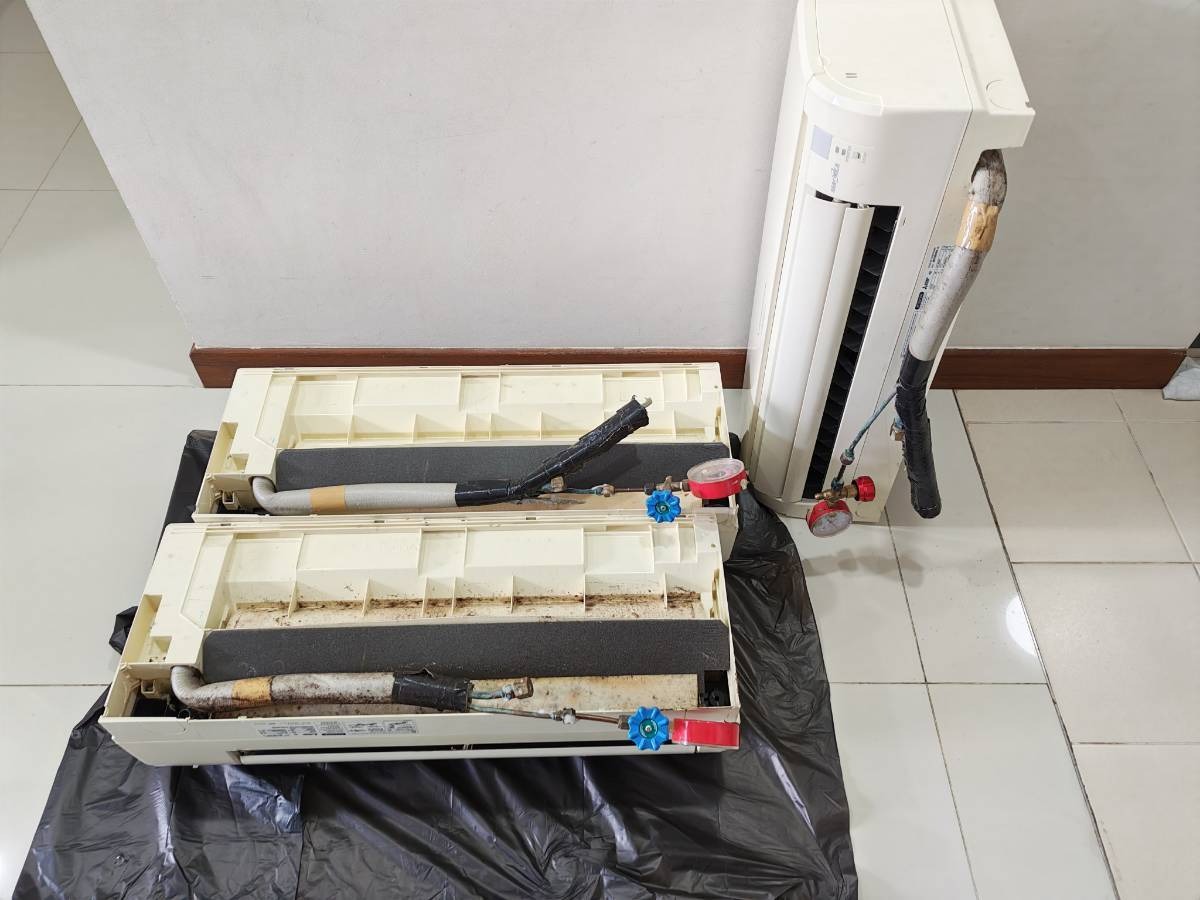
Maybe, but less often than you’d think. A weak aircon doesn’t automatically mean low gas. Dirty filters, clogged coils and airflow problems cause the same complaints. The refrigerant sits in a sealed system, so if it really is low, there’s usually a leak somewhere. Find out what’s wrong before paying for a top-up.
Does Aircon Gas Run Out During Normal Use?
No. The gas in your aircon isn’t fuel, so it doesn’t get burned off as you use it.
Refrigerant (what most of us call “gas”) travels in a closed loop between your indoor and outdoor units. It picks up heat inside the room and dumps it outside, then goes round again. A healthy system can run for years on the same charge. So when a technician says your gas is low, the next question should be where it went. Usually it has slipped out through a loose flare joint, a worn valve, a pipe or a corroded coil. Topping up without finding the leak is a bit like pumping a slow-puncture tyre and hoping for the best. It works for a while.
Signs That May Indicate Low Refrigerant
Weak cooling, ice on the pipes and a room that takes ages to cool are the usual clues. None of them proves anything on its own.
Here’s what people tend to notice first:
The room takes much longer to cool down than it used to
Ice or frost on the copper pipe or the indoor unit
Air from the vents that’s warm or barely cool
The compressor keeps running but the room never reaches the temperature you set
An electricity bill that has crept up for no obvious reason
A hissing or bubbling sound, which can mean gas is escaping
The trouble is that most of these have other explanations. Ice, for example, shows up with low refrigerant but also when airflow is blocked. So treat these signs as a reason to get the unit checked, not as a verdict.
Aircon leaking or not cold? Talk to our technician today
Low Refrigerant or Another Cooling Problem?
Four faults cause most “my aircon isn’t cold” calls, and each one is checked differently.
Start with the filter, because it’s the easiest to rule out. When it’s clogged with dust, air can’t pass through properly. You get weak airflow, slow cooling and sometimes a stale smell. Pull it out, clean it, put it back, and see if things improve. If they do, your gas was fine all along.
Dirty coils are the next suspect. Dust and grime on the indoor coil or the outdoor condenser stop heat from moving the way it should. You may see poor cooling, higher bills, water dripping or some icing. A technician needs to look at both coils, and a chemical wash often brings performance back without touching the refrigerant.
Then there are airflow problems, such as a tired blower fan, a blocked vent or a clogged drain. They can leave ice on the unit and give you weak or uneven air. The fan, vents and drain should all be checked before anyone reaches for the gas cylinder.
Finally, a leak. A leak tends to build slowly. Cooling gets a little worse each month, ice appears on the pipe, and if someone topped up the gas before, the same problem comes back. Cleaning won’t fix it, and it needs proper readings and leak testing.
A simple way to tell them apart is that a dirty filter or coil usually gets better after cleaning, while a leak keeps getting worse.
What Should a Technician Check Before Adding Gas?
Airflow, coil condition, how the unit performs while running, and a proper leak test where it’s called for. Not just one pressure reading.
A good technician starts with the boring stuff: the filter, the blower fan and how much air is coming out of the vents. Then they look at both coils, because dirt there can pass for a gas problem. Only after that do they see how the system behaves while it’s running. That might mean checking the temperature difference across the indoor coil, how the outdoor unit is behaving and, where it makes sense, pressure readings.
Pressure on its own can fool you. It changes with the outdoor temperature, how long the unit has been on, the airflow and the type of refrigerant. If someone takes a single reading, declares the gas low and starts topping up, you may be paying for something you didn’t need.
If low refrigerant still looks likely, the next step is testing for the leak. Depending on the unit and how easy it is to reach, that can be a visual check, an electronic leak detector or a nitrogen pressure test. The right method depends on where the leak is suspected and how the unit is installed.
How Much Does an Aircon Gas Top-Up Cost in Singapore?
The cost depends mainly on the type of refrigerant and how much your unit needs. At Aircon FairPrice, general servicing starts at S$40, and we’ll quote your gas top-up based on what your unit actually requires.
We handle general servicing, chemical wash, chemical overhaul, gas top-up, repair, installation and replacement. A lot of “not cold” complaints turn out to be a servicing or chemical wash job, which is why we look at the cause first.
A few things move the price:
Refrigerant type. R32, R410A and R22 don’t cost the same. R22 is being phased out around the world, so it can be harder to get and priced differently. You’ll find the type printed on the label of your outdoor unit.
How much gas is needed. A small top-up costs less than refilling a system that has lost most of its charge.
Diagnosis. Checking the unit properly before adding gas is part of doing the job right, so ask what the quote includes.
Leak repair. Fixing a leak is a separate job from adding gas. Re-tightening a joint is usually far cheaper than welding a pipe or replacing a coil.
Access. If your ceiling is higher than 3 meters, there’s a S$20 per unit surcharge, since the job needs extra equipment and time.
Extra charges that may apply:
Blower removal: S$10 per unit
CBD area surcharge: S$20
Brand surcharge: S$15
Ceiling height above 3 meters: S$20 per unit
Leak repair and replacement parts, quoted separately after diagnosis
Always ask for the full price, including any surcharges, before you approve the work.
When Is a Gas Top-Up Appropriate, and When Is Repair Needed?
A top-up makes sense once the cause is understood. If there’s a leak, it needs to be repaired.
It really does come down to what the technician finds. If there’s no leak and the charge is just slightly low, a small top-up can be reasonable, especially on an older unit. If there is a leak, it should be fixed first and the gas added after. And if the cause turns out to be a dirty filter or coil, servicing or a chemical wash may bring the cooling back without any gas.
The trap is repeated top-ups with no investigation. Each visit costs you another charge of refrigerant, and a leak that keeps getting worse can eventually strain the compressor. If you’ve needed gas twice within a few months, stop topping up and find where it’s going. On an older unit with repeated or coil leaks, it’s also worth comparing the repair quote with the price of a newer, more energy-efficient replacement.
Book aircon servicing or repair with expert technicians
Questions to Ask Before Approving a Gas Top-Up
You’re entitled to ask, and a decent technician won’t mind.
These are the ones worth asking:
What tells you the refrigerant is low? The answer should be more than one pressure reading.
Did you find a leak? If not, how did you check?
What does the quote cover? Ask about the refrigerant type, the amount, any testing, and whether surcharges for ceiling height, brand or CBD location apply.
Does it need a repair? If so, ask for a separate written quote.
What warranty do I get? This varies by service. At Aircon FairPrice, general servicing has a 7-day warranty, chemical wash and chemical overhaul have 30 days, and installation has one year. Repair and replacement work don’t come with a warranty. Ask about coverage for a gas top-up when you book.
It’s also worth confirming which refrigerant your unit uses before work starts. Refrigerants can’t be mixed, and R32 should only be handled by technicians trained for it.
How to Reduce the Risk of Repeat Cooling Problems
Keep up with servicing, keep your paperwork, and don’t sit on a problem once cooling starts to slip again.
Regular servicing keeps the filters, coils and drain clean, and gives a technician a chance to catch trouble early. Hold on to a record of each visit: what was done, which refrigerant is in the unit, how much was added and whether a leak was found. It helps the next technician, and it shows you straight away if the same fault keeps coming back. And if the cooling drops again after a service, top-up or repair, book a follow-up soon rather than waiting it out. Small leaks are cheaper to fix early, and the 7-day and 30-day warranties on servicing and chemical wash mean it’s worth calling quickly after those jobs.
Book an Aircon Cooling Diagnosis in Singapore
Not sure if your aircon needs gas, a clean or a repair? AirconFairPrice.Sg looks at the cause first and recommends work after that. Take a look at our gas top-up and aircon repair service pages to book a diagnosis.
FAQs
Does aircon gas need to be topped up every year?
No. Refrigerant isn’t used up when the aircon runs, so there’s no reason to top it up every year. If a system really is low, there’s usually a leak and it should be looked into. What does keep a unit healthy is regular servicing, which starts at S$40 with us. Gas only needs checking when the symptoms or readings point that way.
How can I tell whether my aircon needs gas or cleaning?
Honestly, it’s hard to tell without a proper check, because the symptoms look so similar. You can start with something safe: turn the unit off, take out the indoor filter and see if it’s clogged with dust. If it is, rinse it, let it dry completely and put it back. If the cooling improves, cleaning was the answer. If it doesn’t, or you notice ice on the pipe, a hissing sound or water leaking, get it looked at. And please don’t try to handle the refrigerant yourself.
Can I top up aircon gas without fixing a leak?
You can, but it’s rarely a good idea. Adding gas doesn’t repair the leak, so the cooling may fade again in a few weeks or months. You pay for gas every time, and the leak can get bigger. It’s better to fix the leak first, then recharge to the right amount. Keep in mind that repair work at Aircon FairPrice doesn’t carry a warranty, so ask for a clear explanation of what was fixed and tested.
How much does an aircon gas top-up cost in Singapore?
It depends on your refrigerant type and how much gas the unit needs, so the price varies from unit to unit. A few extra charges can apply: S$10 per unit for blower removal, S$20 for CBD locations, S$15 for certain brands and S$20 per unit for ceilings above 3 meters. Also remember that a top-up isn’t the same as leak detection and repair. Detection finds the leak, repair fixes it, and a top-up only puts the refrigerant back. If the job goes beyond a simple top-up, the cost goes up too.
Why is my aircon still not cold after a gas top-up?
Most likely, the top-up didn’t address the real problem. The leak may still be there, the amount of gas may be off, or something else is wrong, like clogged filters or coils, a weak fan or a failing compressor. Getting more gas added isn’t the answer. Book a follow-up diagnosis instead. And if you were quoted a top-up without anyone checking anything first, it’s fair to ask what was actually tested.